Diagnostic Precision • Kings County
Leak Detection in Downtown Brooklyn, Brooklyn
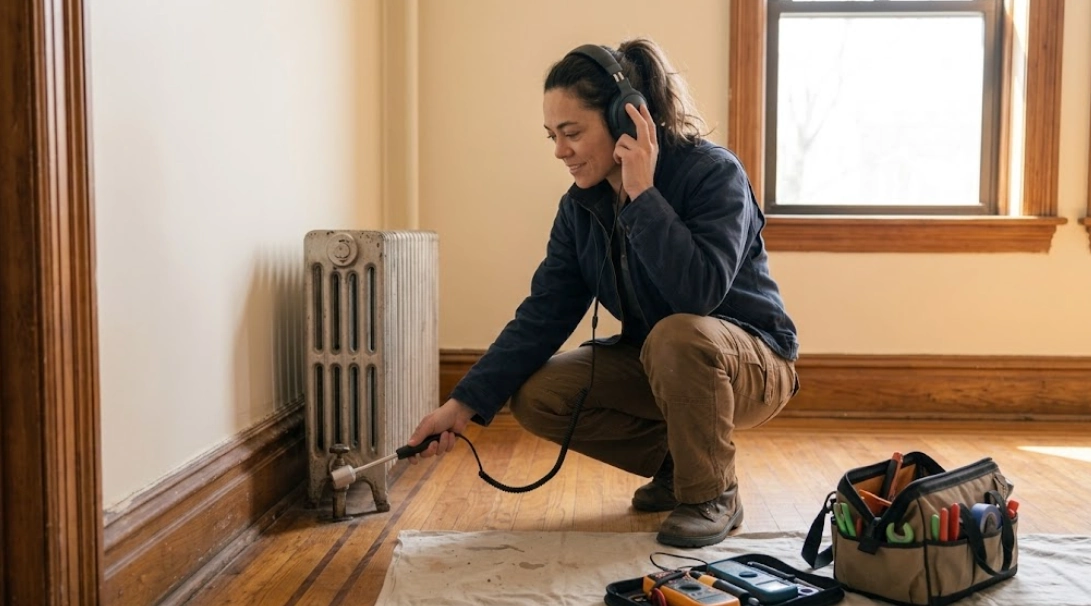
Concealed water leaks in high-density Downtown Brooklyn residential high-rises, converted industrial lofts, and historic brownstones cause severe cosmetic and structural damage when left unaddressed. Our diagnostic specialists deploy non-invasive electronic leak detection, acoustic pipe listening, and infrared thermal imaging to isolate hidden pipe breaches without unnecessary demolition of walls, floors, or ceilings.
Direct telephone dispatch • Non-destructive testing • Multi-unit co-op and condominium coordination
Common Physical Signs of a Hidden Water Leak
In urban communities like Downtown Brooklyn, domestic water supply lines and closed hydronic heating pipes run concealed behind fire-rated drywall, concrete subfloors, and vertical plumbing chases. Because piping is hidden from sight, water leaks often remain undetected until significant moisture accumulates inside building assemblies. Early recognition of physical warnings prevents ceiling collapses, hardwood warping, and hazardous mold growth.
Water Stains on Ceilings & Walls
Yellowish, brownish, or dark discolored rings on painted drywall or plaster often signal slow, persistent pressurized pinholes traveling along concrete slabs or horizontal pipe runs.
Bubbling Paint & Peeling Finishes
Moisture migrating through interior partition walls breaks the adhesive bond between primer and sheetrock, resulting in blistered paint, crumbling plaster, and soft baseboards.
Warped Hardwood & Damp Flooring
Engineered oak flooring, historic parquet, or laminate planks absorb moisture from below, causing cupping, crowning, and spongy hollow spots underfoot.
Persistent Musty Odors
Trapped water within insulated wall cavities produces a damp, earthy smell. Elevated relative humidity inside utility closets or under sinks warrants immediate technical inspection.
Audible Trickling or Hissing Sounds
When all faucets and valves are completely shut off, hearing continuous trickling or a faint high-frequency hissing indicates pressurized water escaping through a fissure.
Unexplained Utility Water Spikes
In sub-metered condominium units or commercial buildings, unexpected increases in continuous daily water consumption often point to an undetected subterranean or in-wall leak.
Urgent Moisture Mitigation Dispatch
If water is actively dripping through your ceiling, pooling near electrical panels, or flowing across flooring, shut off your apartment's main isolation valve immediately and call our dispatch line at (315) 202-8009 for immediate technical coordination.
Why Leak Detection Is Complex in Downtown Brooklyn Properties
Tracing water leaks in Downtown Brooklyn presents mechanical challenges rarely encountered in suburban construction. The architectural fabric around Fulton Mall, MetroTech Center, and the approach to the Brooklyn Bridge spans multiple structural generations:
- Converted Commercial & Industrial Lofts: Historic manufacturing buildings repurposed into residential condominiums often feature complex pipe runs where modern copper branches interlace with original cast-iron risers, structural steel columns, and heavy brick masonry.
- Post-Tensioned High-Rise Concrete: Modern luxury residential towers feature solid post-tensioned concrete slabs. Water escaping a branch line on the 18th floor can travel horizontally along floor decking for thirty feet before exiting through a light fixture box on the 17th floor.
- Shared Multi-Story Wet Stacks: Multi-family vertical living means plumbing lines are shared across stacked apartments. A pinhole failure in an upper unit's bathroom chase can manifest three floors below without wetting intermediate ceilings. Executing thorough apartment leak detection Downtown Brooklyn Brooklyn requires methodical isolation of each vertical branch.
- Building Management Coordination: Co-ops, condominiums, and rental management offices enforce strict protocols, insurance minimums, and permitted work windows before mechanical exploration can begin.
How Professional Non-Invasive Leak Detection Works
Instead of executing blind exploratory demolition across finished drywall, designer tile, or custom millwork, modern diagnostic plumbing employs specialized non-destructive instruments:
Infrared Thermal Imaging
High-resolution FLIR thermographic cameras detect subtle surface temperature differentials caused by hidden evaporative cooling or hot-water supply lines concealed behind walls.
Ultrasonic Acoustic Listening
Electro-acoustic ground microphones and frequency-filtered acoustic probes amplify the sound of water escaping under line pressure through microscopic pipe fractures.
Precision Moisture Profiling
Calibrated non-invasive radio-frequency moisture meters map deep sub-surface moisture gradients, tracing wet tracks backward toward the origin point.
Pressure Decay Isolation
Isolating individual domestic supply loops with test gauges confirms whether pressure loss is active before performing invasive physical opening.
When deploying hidden water leak detection Downtown Brooklyn Brooklyn methods, technicians gather empirical forensic evidence. This data determines whether responsibility belongs to an individual proprietary leaseholder or the building corporation's common plumbing risers.
Apartment-to-Apartment Leaks and Multi-Unit Coordination
One of the most frequent plumbing dilemmas in Brooklyn high-rises is an unexpected water leak from upstairs apartment Downtown Brooklyn Brooklyn event. A resident discovers water dripping through their bathroom ceiling, but the neighbor directly above insists their bathroom floor is dry.
Because water tracks along sub-slab waterproofing membranes, electrical conduits, or steel floor beams, resolving apartment-to-apartment moisture disputes requires experienced diagnostic protocol:
- Coordinated Access: Inspecting both the affected lower ceiling and the unit directly above, evaluating shower pans, vanity traps, concealed toilet tanks, and supply shutoff valves.
- Superintendent Liaison: Collaborating with resident managers to review mechanical drawings and access common riser shafts.
- Targeted Ceiling Repair: Once the breach is isolated, our team coordinates with our specialized pipe leak repair mechanics to access the pipe precisely, stopping the leak while facilitating prompt ceiling leak repair Downtown Brooklyn Brooklyn remediation.
Less Disruptive Detection: Understanding the Diagnostic Boundary
Residents frequently ask whether a leak can be fixed completely without opening a wall. While non-invasive diagnostic tools eliminate blind guesswork across rooms, physical mechanical repairs ultimately require access to the pipe itself.
The critical benefit of precision leak in wall detection Downtown Brooklyn Brooklyn is containment. Instead of cutting open six feet of drywall or tearing out an entire bathroom tile wall, diagnostics isolate the failure to within a few inches. This allows a technician to cut a small, clean access hatch directly over the compromised fitting, minimizing reconstruction expenses.
Repair versus Replacement Decisions
Locating a concealed leak raises a vital question: is a localized spot repair sufficient, or is broader piping modernization warranted?
If testing identifies an isolated mechanical failure—such as a stressed copper elbow fitting or an electrolytic pinhole—a targeted solder or press-fitting sleeve repair executed by our pipe leak repair team provides a durable, cost-effective solution.
However, if acoustic and visual inspection reveals widespread interior pipe scale, severely thinned copper walls, or chronic rust flaking throughout an aging galvanized distribution system, spot repairs simply shift hydraulic pressure to the next weak point. In such scenarios, our technicians provide an objective assessment for comprehensive repiping services to restore long-term domestic water reliability.
Factors Affecting Diagnostic and Repair Scope
Because every building in Downtown Brooklyn possesses unique mechanical configurations, diagnostic and repair scope depends on real-world site variables:
- Piping Material and Age: Testing pressurized Type L copper lines differs from evaluating legacy threaded galvanized steel, cast-iron stacks, or PEX tubing.
- Building Height & Static Pressure: High-rise towers require pressure-reducing valves (PRVs) across mechanical zones; elevated pressure influences acoustic sound signatures.
- Wall and Ceiling Construction: Plaster-and-lath in historic buildings, multi-layer fire-rated sheetrock partitions, and suspended acoustical drywall ceilings alter moisture absorption.
- Isolation Valve Operability: The functionality of local fixture stops and apartment shutoff valves determines whether an individual branch can be isolated without requiring a full building riser shutdown.
Practical Prevention Advice for Downtown Brooklyn Residents
Preventing catastrophic water damage requires proactive awareness and simple precautionary habits:
- Locate Your Main Apartment Shutoff: Know the exact location of your unit's primary cold and hot water shutoff valves (typically inside a bathroom access panel or hallway mechanical closet). Test them annually to ensure they turn freely.
- Upgrade Appliance Supply Lines: Replace rubber washing machine and refrigerator ice maker hoses with stainless steel braided burst-proof lines every five years.
- Inspect Exposed Fixture Valves: Periodically check under kitchen sinks and bathroom vanities for green oxidation or white mineral crusting around brass angle stops.
- Install Smart Water Leak Sensors: Placing battery-operated WiFi moisture sensors beneath water heaters, washing machines, and refrigerator supply lines provides instant alerts before water penetrates floor slabs.
Comprehensive Plumbing & Mechanical Services
Accurate leak detection forms the foundation for dependable, long-term mechanical repairs. Explore our seven supporting plumbing specialties serving Downtown Brooklyn:
Pipe Leak Repair
Targeted mechanical repair of copper pinholes, corroded joints, and burst water pipes. We resolve localized breaches with minimal structural demolition.
View Pipe Leak Services →Repiping
Complete domestic water line replacement for aging galvanized and degraded copper distribution systems throughout co-ops and multi-family buildings.
View Repiping Solutions →Water Heater Repair
Diagnostic repair and replacement for leaking domestic water heaters, heating element faults, gas burner troubleshooting, and indirect storage tanks.
View Water Heater Services →Boiler Repair
Restoring residential steam and hydronic hot-water boiler heating systems, circulator pumps, zone valves, and safety low-water cutoffs.
View Boiler Repair Services →Gas Line Repair & Inspection
Licensed gas piping safety inspections, appliance hookups, and NYC Local Law 152 periodic testing compliance for commercial and multi-family properties.
View Gas Piping Services →Drain Cleaning
Clearing stubborn kitchen sink grease blockages, bathroom mainline clogs, and sluggish waste risers with motorized augers and high-resolution camera surveys.
View Drain Cleaning Services →Backflow Testing
Certified annual backflow preventer testing, DEP compliance filings, and device rebuilds to safeguard potable water systems across Brooklyn buildings.
View Backflow Testing Services →Serving Downtown Brooklyn and Surrounding Neighborhoods
From the bustling retail corridor of Fulton Mall and the tech campuses around MetroTech Center to residential towers facing the Brooklyn Bridge and Barclays Center, our diagnostic technicians provide specialized leak detection tailored to Kings County's urban environment.
We also provide reliable leak detection near DUMBO converted warehouse lofts where historic timber framing requires delicate moisture tracing, dedicated leak detection near Vinegar Hill residential streets with older building layouts, and specialized leak detection near Boerum Hill brownstones and multi-family properties. To explore our broader service reach including Brooklyn Heights, Fort Greene, Cobble Hill, and Clinton Hill, visit our comprehensive Service Areas directory.
Frequently Asked Questions About Leak Detection
How does non-invasive leak detection locate water without cutting open every wall?
Technicians combine thermal infrared imaging to detect subtle temperature anomalies, precision electronic moisture meters to map moisture paths, and ultrasonic acoustic listening devices to identify pressurized water escaping microscopic pipe fractures. This allows targeted inspection before any drywall or masonry removal.
What should I do if water is leaking through my ceiling from an upstairs apartment?
Immediately place a catch bucket under the drip, protect electrical fixtures by keeping room switches off, alert the upstairs neighbor so they can halt fixture usage, and notify the resident superintendent or managing agent to inspect the vertical building riser.
Why are leaks difficult to trace in Downtown Brooklyn residential buildings?
Downtown Brooklyn properties include converted industrial lofts, pre-war residential buildings, and modern high-rise concrete towers. Escaping water often tracks horizontally along concrete floor decks, steel beams, and fire-stopped pipe chases, emerging many yards away from the actual pipe break.
Will building management or a co-op board allow your leak detection service?
Yes. We coordinate with Brooklyn managing agents, superintendents, and co-op boards. Non-invasive diagnostics provide empirical evidence that clarifies whether a leak originates from common building risers or individual apartment branch piping.
What should I have prepared when I call for leak detection in Downtown Brooklyn?
Please have your building address, apartment number, description of observed symptoms (stains, active dripping, warped flooring, sounds of running water), whether neighboring units or building staff have been notified, and access details for shutoff valves ready.